
Last updated: October 13, 2026
Quick Answer: A strong topic-cluster article usually lands at 900 to 1,500 words and answers one sub-question cleanly, not the whole theme. For How to Write SEO Articles for Topic Clusters, the page should solve a narrow problem, link cleanly to the pillar page, and sit beside the other supporting pages with a clear job.
A topic-cluster article that ranks is usually doing one job, not three. That’s the real trick. It should handle one sub-question, solve a narrow problem, and stay visibly different from the pillar page and the rest of the cluster.
A lot of cluster content misses for a plain reason: it reads like a loose blog post that happens to mention a keyword. That’s not enough. The fix is to pick the right cluster angle, match search intent, and build the article so it earns its place beside the pillar and the other supporting pages.
What Actually Makes a Cluster Article Rank
A cluster article ranks when it answers one specific search need better than broader pages do. Say the pillar page covers “SEO content strategy”; a cluster article might cover “how to brief writers for SEO,” “how to map keywords to URLs,” or “how to write title tags for service pages.” Each one should solve a different task.
Ask a blunt question: what would make this page unnecessary if the reader already had the pillar page? That answer usually points straight to the cluster article. With the pillar page already in hand, this page should not be needed. If the page can stand alone as a full guide, you may be writing another pillar by accident.
Here’s the quickest way to tell whether your topic is right:
| Situation | Best Path | Why Other Options Fail |
|---|---|---|
| The query is narrow and task-based | Write a cluster article | A pillar page will be too broad to satisfy intent |
| The query is broad and educational | Make it the pillar | A cluster page will feel thin or repetitive |
| The query needs examples, not strategy | Build a how-to article | Pure definitions won’t hold attention |
| The query overlaps 3+ other pages | Split the topic first | One page will cannibalize the others |
Check the SERP first. If the top results are step-by-step guides, templates, or process pages, the query wants a cluster article. If the results are category pages or massive guides, the searcher wants a broader asset. I wouldn’t force a cluster page to do a pillar’s job; that’s how you end up with bland copy that sits nowhere.
Quick check: strip away the cluster structure for a test. If the page still works, the topic is too broad.
How Do I Pick the Right Cluster Topic?
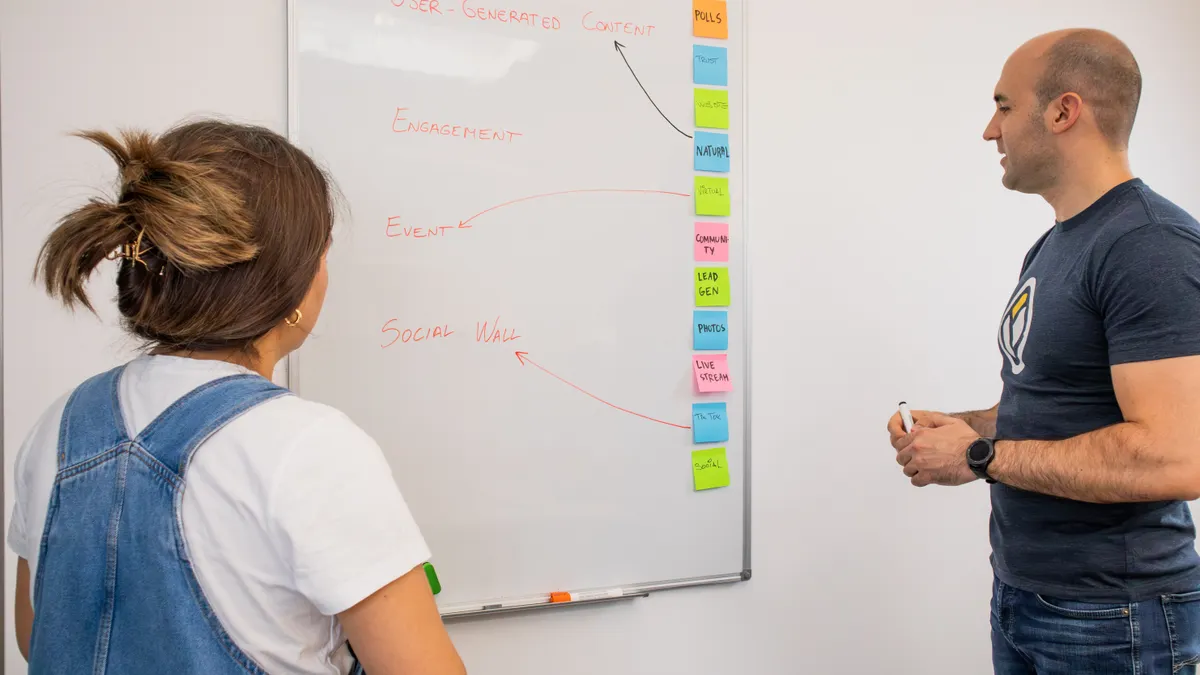
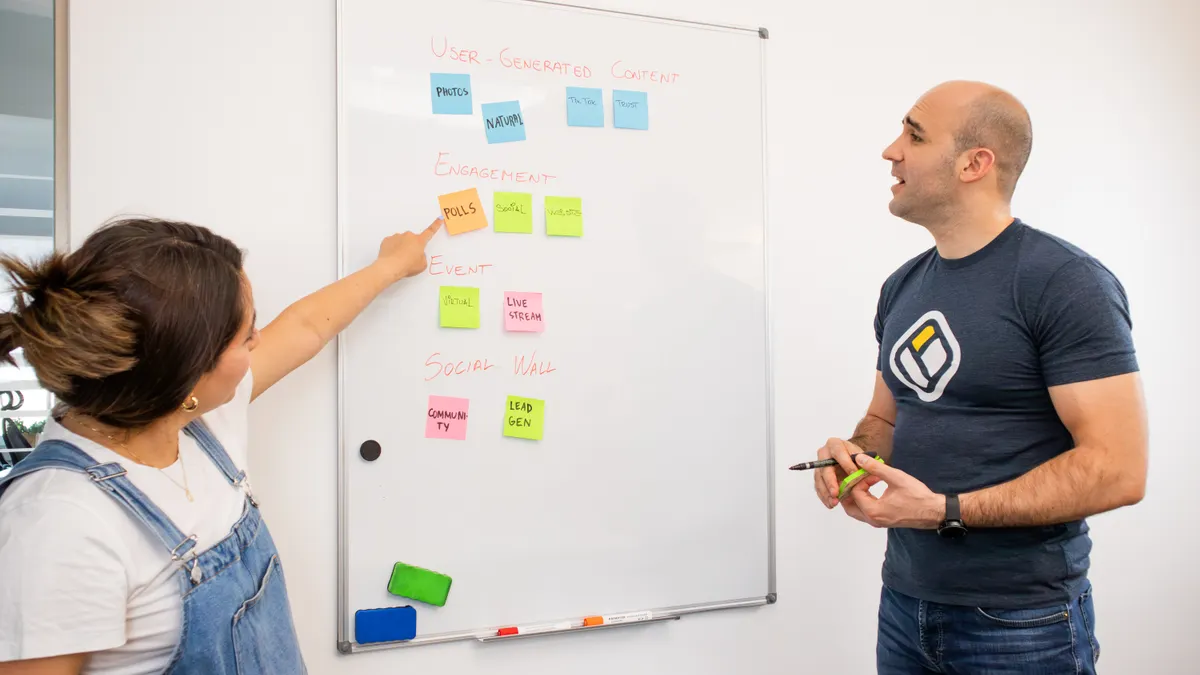
Pick one query, one intent, one audience problem. Start with the real task instead of a keyword list, or you’ll usually get a pile of near-duplicates. What does the reader need to do in the next 30 minutes, 1 day, or 1 week?
If the reader is a content lead, then the article might be “how to assign search intent to cluster pages.” If the reader is a freelancer, it might be “how to write an SEO article brief for a topic cluster.” Those are not the same page. One is strategic. The other is operational.
Use this 5-step filter:
- List the pillar topic in plain English, such as “local SEO” or “email marketing.”
- Write down 10–20 questions people ask after learning the basics.
- Remove anything that can be answered in 2 paragraphs; those usually belong in FAQs or subheads.
- Keep the topics that need examples, judgment calls, or a process.
- Choose the one query that has a clear before-and-after outcome.
Use Ahrefs, Semrush, or Google Search Console to check related queries and page-level impressions. But don’t let volume seduce you. A 50-search query that fits the cluster perfectly can beat a 5,000-search phrase that belongs on a different page. That is especially true when the query has mixed intent; the numbers can lie like a bad map.
One hard rule: do not write two pages that answer the same question with slightly different wording. That is where cannibalization starts. If your draft topic sounds a little too close to another cluster page, combine them or narrow the angle.
Quick check: explain the page in one sentence without using the pillar title. If you can, you’ve probably got a valid cluster topic.
How Should I Structure the Article So It Fits the Cluster?
Build it around the job the reader came to do, then connect it to the cluster with one clear next step. If the article is about writing SEO articles for topic clusters, the reader probably needs process, not theory. They need to know what to write first, what to avoid, and how to keep the page distinct from the pillar.
A good cluster article usually follows this shape:
- Open with the exact problem and the result the reader wants.
- Define the article’s role in the cluster in one sentence.
- Give the decision rule: when this page is the right asset and when it is not.
- Walk through the writing process from research to final edit.
- Show how to connect the article back to the pillar and sibling pages.
- End with edge cases, because cluster pages often live or die on exceptions.
If you’re writing for an SEO team, then add the practical pieces people actually use: H2s, internal link targets, search intent notes, and content brief fields. For a solo site owner, strip the process down to something they can do in an hour or two.
The biggest structural mistake is repeating the pillar page’s framework. A cluster article should not re-explain the whole topic at the same altitude. If the pillar already owns the big picture, this page should own the useful slice. That usually means examples, tactics, and decision rules.
I’d also keep one section that explicitly says, “This page is not for X.” It sounds small, but it helps both readers and search engines. A page that knows its limits is easier to trust.
Quick check: if every section could also live on the pillar page, the structure is too generic.
What Should the Writing Process Look Like?
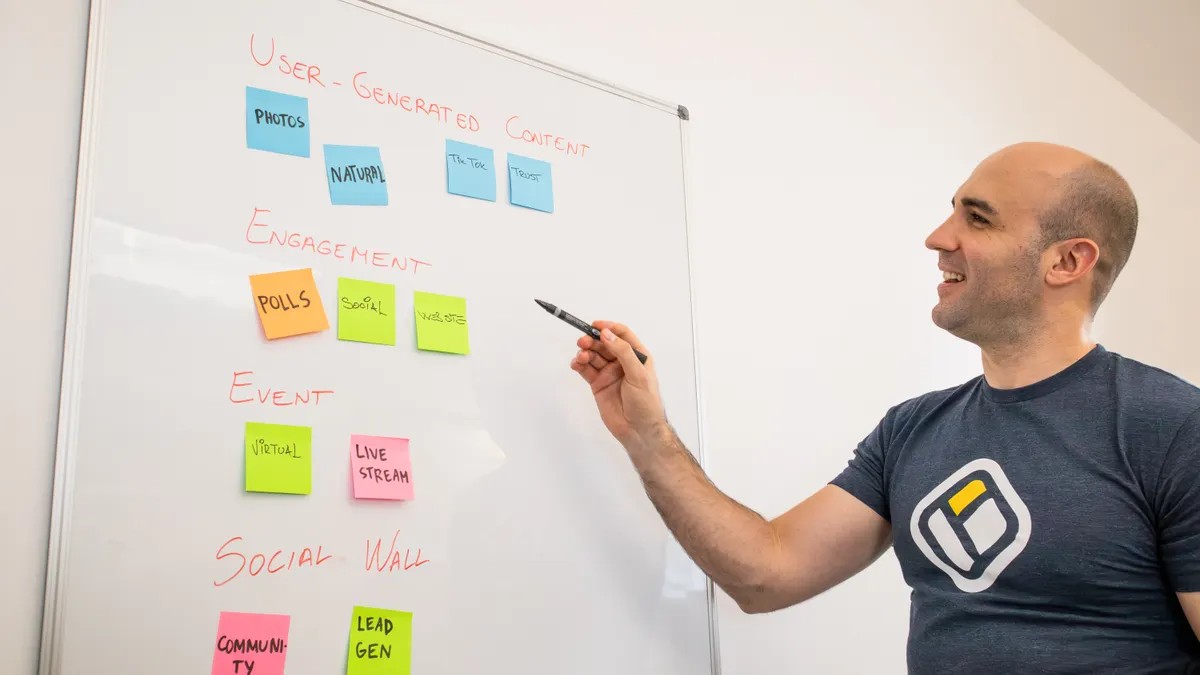
Start with search intent, then headings, then proof. If you write the body before the angle, the article will drift toward summary mode. If you write the angle before the outline, you’re more likely to make the page distinct.
Use this workflow:
- Open the SERP in an incognito window and note the page types ranking in the top 10.
- Write the reader’s exact problem in one sentence.
- Decide the article’s job: explain, compare, troubleshoot, or template.
- Draft 4–6 H2s that each answer a different sub-question.
- Under each H2, write the first sentence as the direct answer.
- Add one concrete benchmark, model, standard, tool name, or time frame where it helps.
- Trim any paragraph that repeats the pillar or another cluster page.
Take internal links as an example. “How many links?” is not the same as “Where should they point?” or “What anchor text should I use?” Each one deserves its own paragraph or section. Lump them together, and the page turns foggy fast.
This is also where specificity matters. “Make it valuable” is not a writing instruction. “Use one example of a pillar-to-cluster link and one example of a sibling-page link” is. “Improve readability” is vague; “keep paragraphs under 4 sentences and use one subhead every 150–250 words” gives you something to do.
I would avoid stuffing every cluster article with generic SEO talk. The reader already knows they need keywords, headings, and links. They came for the part that is still unclear. If the section does not change what they would do next, cut it.
Quick check: remove one section and read it again. If the article still reads the same, that section is dead weight.
What Do I Put in the Article Itself?
Put the decision points, examples, and linking logic in the article itself, not just in the brief. If the page is supposed to help someone write SEO articles for topic clusters, then the body should model that behavior.
A practical article usually includes four things:
- The angle — what question this page answers.
- The boundary — what it does not cover.
- The method — the sequence of steps.
- The placement — how it links to the pillar and related cluster pages.
If you’re writing for a commercial topic, make the recommendation clear. If you’re writing for an informational cluster, stay closer to explanation and examples. In both cases, though, the article should use concrete nouns. “Search intent,” “anchor text,” “pillar page,” “supporting article,” and “internal link map” are better than airy phrases like “better alignment.”
A simple rule I use for cluster articles: every major section should earn one of three jobs — teach, decide, or distinguish. If it does none of those, it probably belongs somewhere else.
And yes, you should include a short FAQ at the end. Not because FAQs are magic, but because cluster pages often attract close variations of the same question. A tight FAQ can mop up those variations without bloating the body.
Key Takeaways
- A cluster article should own one narrow search need, not the whole topic.
- The page structure should follow the reader’s task, not a generic blog format.
- Specificity beats volume: one useful decision rule is worth three vague tips.
- If the page overlaps the pillar too much, narrow it or merge it.
- A good FAQ handles the “near-miss” questions the main body doesn’t need to repeat.
Quick check: if your draft has no clear boundary between this page and the pillar, the body needs another pass.
What Are the Edge Cases That Break the Usual Rules?
The usual advice falls apart when the topic is too broad, the SERP is mixed, the audience is split, or the page sits in a thin cluster. If any of those are true, you need a different shape.
Here are the cases I’d watch for:
-
Situation: the keyword is broad but the business need is narrow.
What changes: search volume may be high, but the page still needs one task.
What to do instead: write for the business use case and support it with examples, not breadth. -
Situation: the pillar page is already strong and ranks well.
What changes: the cluster page must avoid overlap.
What to do instead: go deeper into sub-steps, edge cases, or templates. -
Situation: the topic has mixed intent.
What changes: the SERP shows guides, tools, and definitions together.
What to do instead: choose one intent and state it early so the page doesn’t wobble. -
Situation: the site is small and the cluster has only 2–3 pages.
What changes: there may not be enough supporting content yet.
What to do instead: write a tighter page and connect it to broader, existing assets. -
Situation: the reader is advanced, not beginner.
What changes: basic explanations become noise.
What to do instead: skip definitions and focus on trade-offs, process, and edge cases. -
Situation: the topic depends on tools like Ahrefs, Semrush, or Search Console.
What changes: the article needs tool-specific steps.
What to do instead: name the tool and show exactly what the reader should look for, such as queries, pages, or anchor text.
If you’re dealing with any of these, the default “write a friendly SEO guide” formula will underperform. The page has to get more opinionated, not more padded.
Quick check: if your topic has mixed intent, a thin cluster, or an advanced audience, use a narrower article with stronger boundaries.
How Do I Know the Article Is Good Enough to Publish?
Good enough to publish means the reader can tell, in the first 2 paragraphs, exactly what the page will help them do. If that is still fuzzy, the page is not ready. Good cluster content is easy to mislabel as “done” because it sounds polished while still failing to solve a real sub-problem.
Use this final pass:
- Read the opening and confirm the subject appears naturally in the first paragraph.
- Check every H2 and ask whether it adds something new.
- Look for repetition between the pillar page and this page.
- Confirm the article includes at least one real tool, standard, model, or benchmark.
- Make sure the first sentence under each H2 answers the heading directly.
- Verify the article contains a real limitation or non-fit case.
- Read the FAQ and make sure each answer is short and direct.
For source-backed claims, use authoritative pages from places like Google Search Central, Ahrefs, Semrush, or the Content Marketing Institute when you need background on SEO structure and content strategy. If you cite a standard or process, name the organization plainly rather than dressing it up.
According to Google Search Central, internal links help search engines discover pages and understand site structure, which is why cluster articles should point back to the pillar and across to related supporting pages. Ahrefs also notes that internal linking supports crawlability and topical relationships.
The honest test is simple: if the page were removed, would the cluster be weaker in a visible way? If the answer is no, the article is probably too generic. If the answer is yes, you’ve written something with a real job.
Quick check: if you can’t explain why this page exists beside the pillar page, publish nothing yet.
FAQ
What is a topic cluster in SEO?
It is a group of pages built around one broad subject, with a pillar page covering the main topic and cluster pages covering narrower questions.
Should every cluster article link back to the pillar page?
Yes, usually. The link helps show the relationship between pages, but the anchor text should fit the sentence instead of sounding forced.
How long should a cluster article be?
Long enough to answer the specific question fully, and no longer. A 900-word page can be enough for a narrow task, while a broader support page may need closer to 1,200 or 1,500 words.
How many internal links should a cluster article have?
Usually 2 to 5 relevant links is enough for a page around 1,000 to 1,500 words, as long as the links add context and point to useful related pages.
What should I do if the topic overlaps another article?
Narrow the angle, merge the pages, or move one to a different search intent. Two pages that answer the same question usually dilute both.
For a practical reference, Google Search Central’s guidance on internal linking is useful, and the Content Marketing Institute’s resources on content strategy can help when you are mapping the cluster itself.
Drafted with AI; not yet reviewed by a person.


